
Difference Between Vector & Raster Artwork
In the world of graphic design, printing, branding, and digital media, artwork format plays a critical role in determining quality, flexibility, and final output. Yet, one of the most misunderstood topics among businesses and even designers is the difference between vector artwork and raster artwork.
Clients often ask:
- “Why does my logo look blurry when printed large?”
- “Why is my file rejected by the printer?”
- “Can’t you just resize this image?”
- “Why do you need a vector file when I already sent a PNG?”
The answer almost always comes down to understanding vector vs raster artwork.
This blog provides a detailed, practical, and industry-focused explanation of both formats, how they work, where they are used, and why choosing the right one is crucial—especially for professional printing and production.
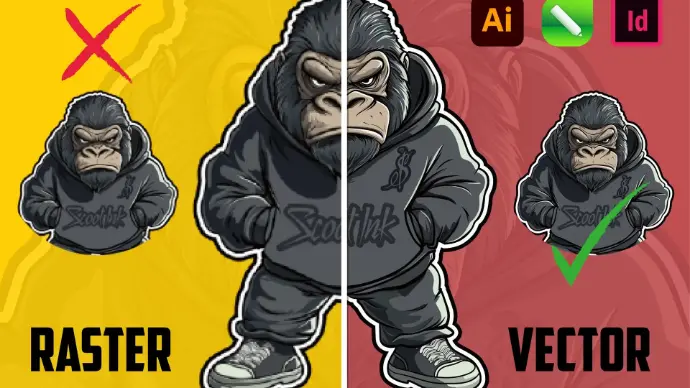
What Is Raster Artwork?
Raster artwork (also known as bitmap artwork) is made up of pixels—tiny colored squares arranged in a grid. Each pixel contains color information, and together they form an image.
Common Raster File Formats
- JPG / JPEG
- PNG
- GIF
- TIFF
- BMP
- PSD (Photoshop file)
Raster images are resolution-dependent, meaning their quality is fixed based on the number of pixels they contain.
How Raster Images Work
When you zoom into a raster image, you’ll eventually see individual square pixels. When you enlarge a raster image beyond its original resolution, the pixels stretch, causing:
- blurriness
- pixelation
- jagged edges
- loss of detail
This limitation makes raster images unsuitable for many professional printing applications.

What Is Vector Artwork?
Vector artwork is created using mathematical paths instead of pixels. These paths are defined by points, lines, curves, and shapes calculated by formulas.
Common Vector File Formats
- AI (Adobe Illustrator)
- EPS
- SVG
- PDF (vector-based)
- CDR (CorelDRAW)
How Vector Artwork Works
Instead of storing pixel data, vectors store:
- coordinates
- curves
- strokes
- fills
- shapes
This allows the artwork to scale infinitely without losing quality.

Vector vs Raster in Printing
Vector files are preferred in printing because they maintain sharp lines, clean edges, and accurate colors at any size. They are ideal for logos, signage, and apparel because they can scale without losing quality.
Raster images can cause blurry text, jagged edges, and color inconsistencies, especially when low-resolution files are used. That’s why printers usually request vector artwork for professional and reliable print results.
Conclusion
Vector and raster artwork serve different purposes—but they are not interchangeable. Knowing when and how to use each format empowers you to create better designs, print with confidence, and protect your brand identity.
If your goal is professional output, scalable branding, and error-free printing, vector artwork is not optional—it’s essential.