
The 200-Polo Order That Came Off the Machine Wrong
It is Monday, 9 a.m. A customer needs 200 polo shirts for a sales conference on Friday. The logo arrives as a clean JPG. Your operator loads it into the software, clicks auto-digitize and starts a test sample.
The first polo comes off the machine. The "e" in the company name has filled in solid. The thin tagline looks like a smudge. The fabric around the outline puckers. The thread snaps twice in three minutes.
Nobody was careless. The artwork looked fine on screen. The problem started earlier: the file was never properly digitized.
Now the team runs more tests. Blank polos are wasted. A day disappears. Friday gets closer.
Every decorator knows that morning. The cause is almost always the same: a weak stitch file. The fix is professional Embroidery Digitizing.
What Embroidery Digitizing Actually Is
Embroidery Digitizing turns artwork into a stitch file. The file tells the machine where to place every stitch, in what order, at what angle and in which color.
A machine cannot read a JPG, a PNG or a vector. It reads instructions. Digitizing writes those instructions.
A logo file is not a stitch file
A logo shows shapes and colors. A stitch file defines how thread will fill, outline and layer those shapes on a specific fabric. The same logo needs different stitch decisions on a cap, a polo and a fleece jacket.
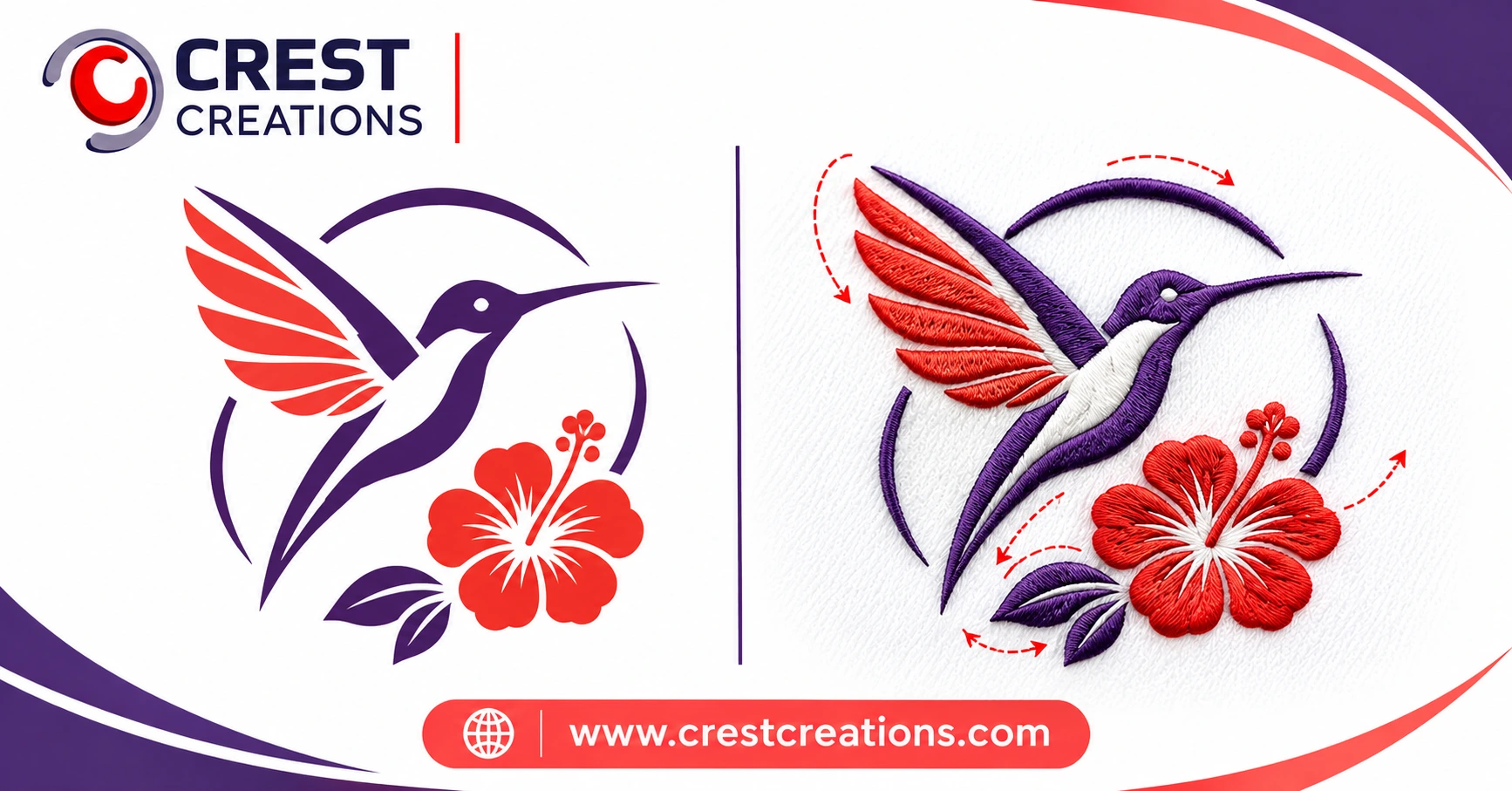
What a digitizer decides on every job
- Stitch type: satin for borders and lettering, fill for large areas, run for fine lines
- Stitch direction and angle: it changes how thread catches the light
- Density: too much thread makes a stiff, bulletproof patch. Too little shows the fabric.
- Underlay: hidden foundation stitches that stabilize the fabric and lift the top stitches
- Pull compensation: extra width that offsets how thread draws fabric inward
- Sequence and trims: the order of colors, and where the machine cuts or travels
These choices decide whether a job runs smoothly or breaks threads all morning.
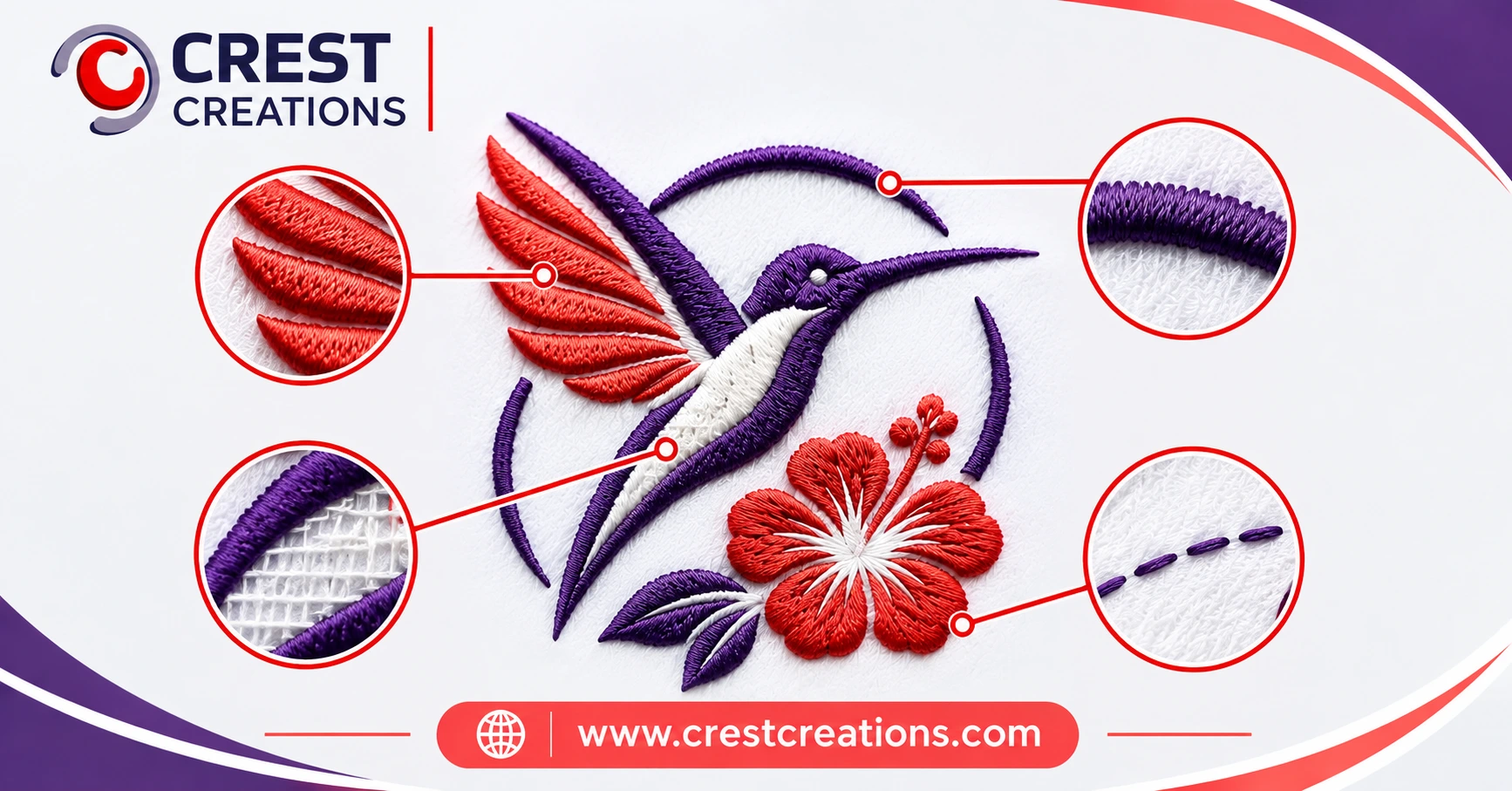
Why one-click auto-digitizing falls short
Auto-digitizing software follows the pixels. It cannot judge fabric, size or thread behavior. It creates too many tiny stitches, blocks small text and ignores pull. You then spend your operator's time fixing the file instead of running the job.
What Bad Digitizing Really Costs You
A poor stitch file does not just look bad. It drains money in ways that are easy to miss:
- Thread breaks that stop the machine
- Wasted blank garments on test runs
- Puckered, rippled or distorted fabric
- Rejected jobs and reruns
- Operator hours spent editing files
- Unhappy customers who do not reorder
One bad file can wipe out the profit on an entire order.
The Marks of Production-Ready Digitizing
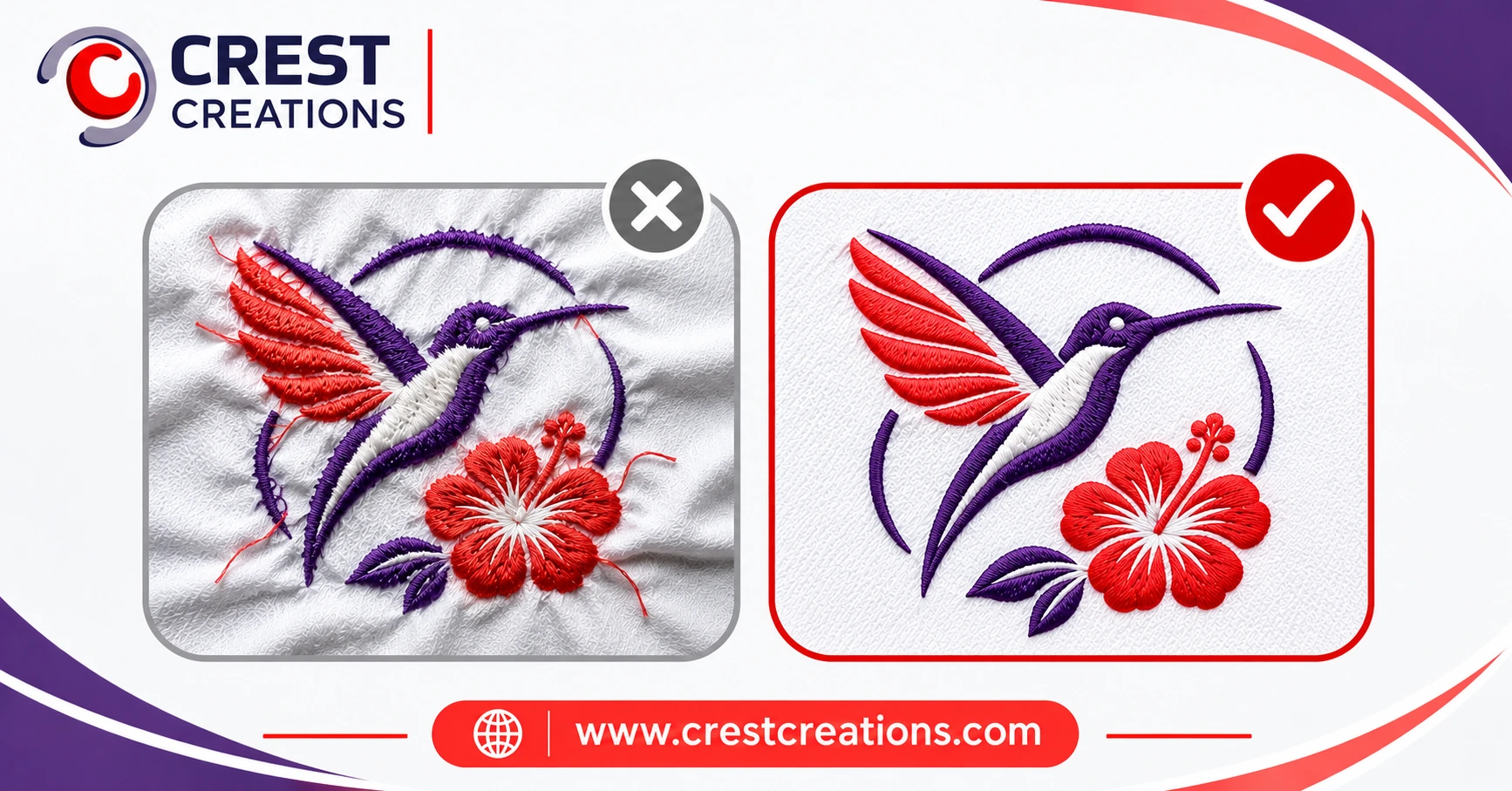
Good Digitizing is quiet. The machine runs, the design looks sharp and nobody talks about it. Look for these signs.
On the machine
- Few thread breaks and clean trims
- Smooth color changes with minimal jump stitches
- Stable running with no bird-nesting or fabric shifting
On the finished piece
- Crisp lettering that stays readable at small sizes
- Even coverage with no gaps and no stiff, over-dense areas
- Outlines that line up with fills
- No puckering around the design
In the file
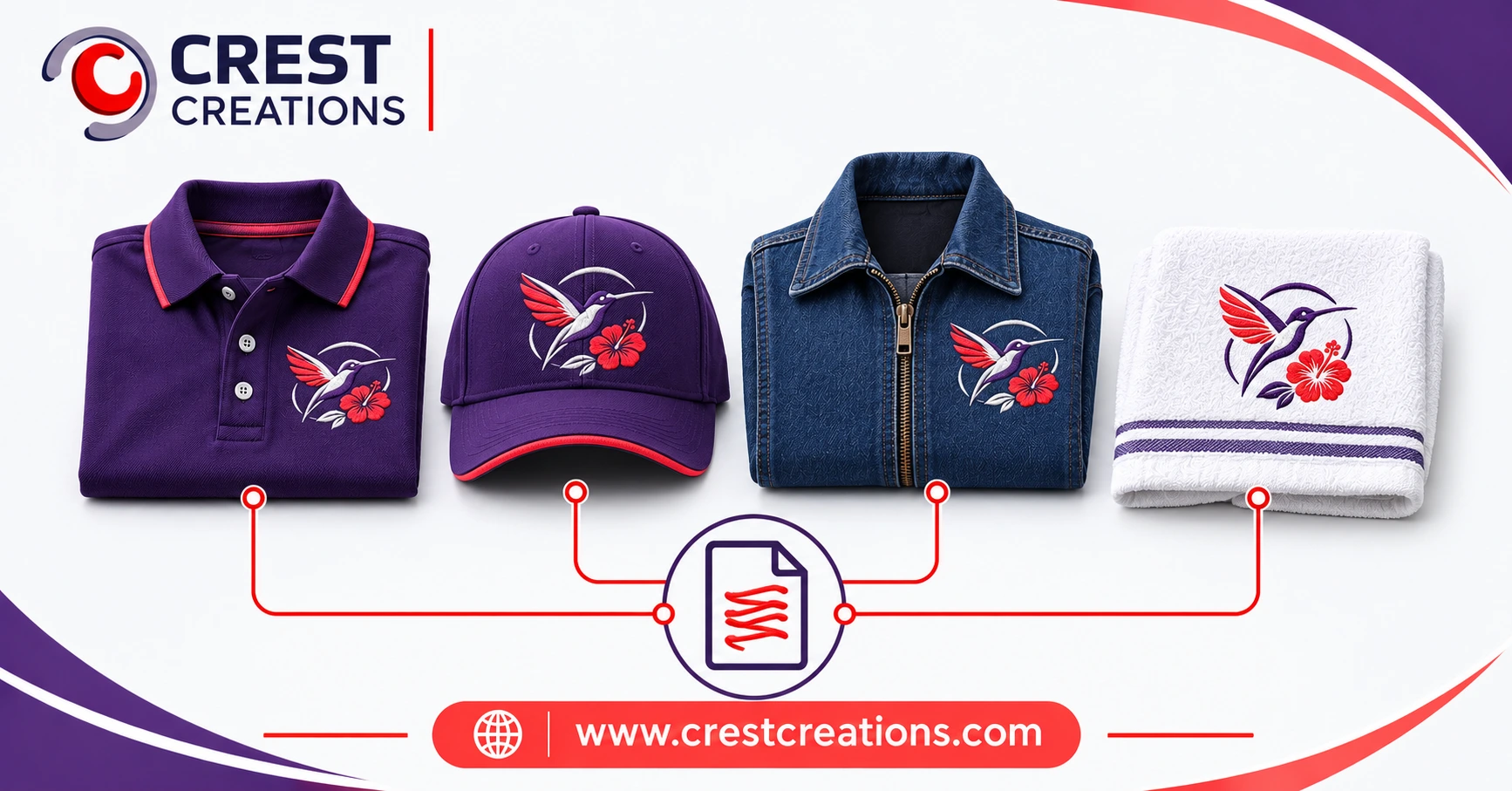
- Stitch settings matched to the fabric: cap, polo, fleece, towel or jacket
- Correct sizing for the placement, not just a scaled-down copy
- A tested, production-ready DST for your machine, plus an editable file for future changes
Small text deserves special care
Tiny lettering is where most files fail. Below a certain height, thread simply cannot form clear letters. A skilled digitizer reworks the text, simplifies the shape or recommends a size change before the job reaches the machine. That one decision saves hours.
Who Needs Embroidery Digitizing Services Most
If your business sells, decorates or manages embroidered goods, a strong stitch file protects your margin. Here is how it helps each part of the industry.
Promotional product distributors and suppliers
You promise the customer a result before anything is stitched. A reliable stitch file lets you quote with confidence, approve artwork early and avoid costly surprises with your decorator. It also keeps repeat orders consistent across years and suppliers.
Apparel decorators and embroidery shops
Your machines earn money only when they run. A tested file means fewer stops, fewer rejects and faster turnaround. Your operators focus on production instead of file repair.
Print shops and screen printers adding embroidery
Embroidery works differently from print. Thread has weight, direction and texture. If you are expanding into embroidery, outsourced Digitizing lets you offer it without hiring a full-time digitizer.
Sign companies
Branded uniforms, patches and fleet apparel often come alongside sign work. Clean stitch files let you take those orders without building a new in-house skill.
Embroidery digitizers
Even experienced digitizers hit overflow. When volume spikes, a trusted partner takes the extra files so your deadlines stay safe and your quality stays steady.
Digitize In-House or Work with a Graphic Design Agency?
Many shops start by digitizing in-house. It works while volume is low. Then orders grow, deadlines tighten and one person becomes the bottleneck.
The hidden cost of doing it yourself
- Skilled digitizers are hard to hire and harder to keep
- Software, training and updates add fixed costs
- Rush jobs pile up at the worst time
- Quality changes from one operator to the next
- Production staff lose machine time to file editing
What the right partner gives you
A dedicated Graphic Design Agency with real Digitizing experience turns file preparation into a predictable service. You send the artwork and the details. You get a tested, production-ready stitch file back. Your team stays on the machines.
The model scales with you. Five files this week or fifty next month: the process stays the same.
Questions to ask any Embroidery Digitizing provider
- Is every file created manually by a trained digitizer, or run through auto-digitizing?
- Do you adjust settings for the fabric and garment type?
- How do you handle small text and fine detail?
- Which formats do you deliver, and can I get an editable file too?
- What turnaround can I expect on rush work?
- Are revisions included?
- Can you work under my brand and keep my customers confidential?
- Is pricing clear before work starts?
A good partner answers every one without hesitation.
Conclusion: Stitch It Right the First Time
Every embroidered order depends on one file. When that file is right, the machine runs, the logo looks sharp and the customer reorders. When it is wrong, you pay for it in thread, blanks, hours and trust.
Remember the 200-polo order? With a tested, production-ready stitch file, the first sample comes off clean. The text is readable. The fabric lies flat. Friday is no longer a problem.
Embroidery Digitizing is not a back-office task. It is the step that protects your margin on every job.
Why work with Crest Creations
Crest Creations is a Graphic Design Agency that supports print shops, promotional product distributors and apparel decorators across the US, Canada, UK, Australia, New Zealand and Denmark. We bring more than 15 years of experience to every file.
- Created manually by trained digitizers, not pushed through one-click software
- Production-ready files in DST, EMB and PDF formats
- Reviewed before delivery for stitch density, underlay and pull compensation
- A team that works around the clock, Monday to Friday
- Unlimited revisions until you are satisfied

Ready to try it?
Send us your next logo. Share the artwork, the garment type and the size you need. Our team will return a clean, production-ready stitch file, so your machines keep running and your customers stay happy.