The Logo That Stalled a 500-Piece Order
It is 4:45 p.m. on a Thursday. A customer needs 500 polos by Tuesday. Her logo arrives as a 72-dpi JPEG pulled from her website.
You open the file. The edges look like a staircase. The text is soft. The thin tagline disappears when you zoom in.
Your decorator cannot digitize it. Your screen printer cannot burn a clean screen. Your sign shop cannot cut it. You email the customer. She replies: "That's the only file I have."
Now the clock works against you. Someone on your team redraws the logo by hand. It eats three hours. The result still looks off. The proof goes out late. The customer is annoyed. The margin is gone.
Every shop in this industry has lived that day. Almost all of them fix it the same way: with Vector Conversion.
What Vector Conversion Actually Does
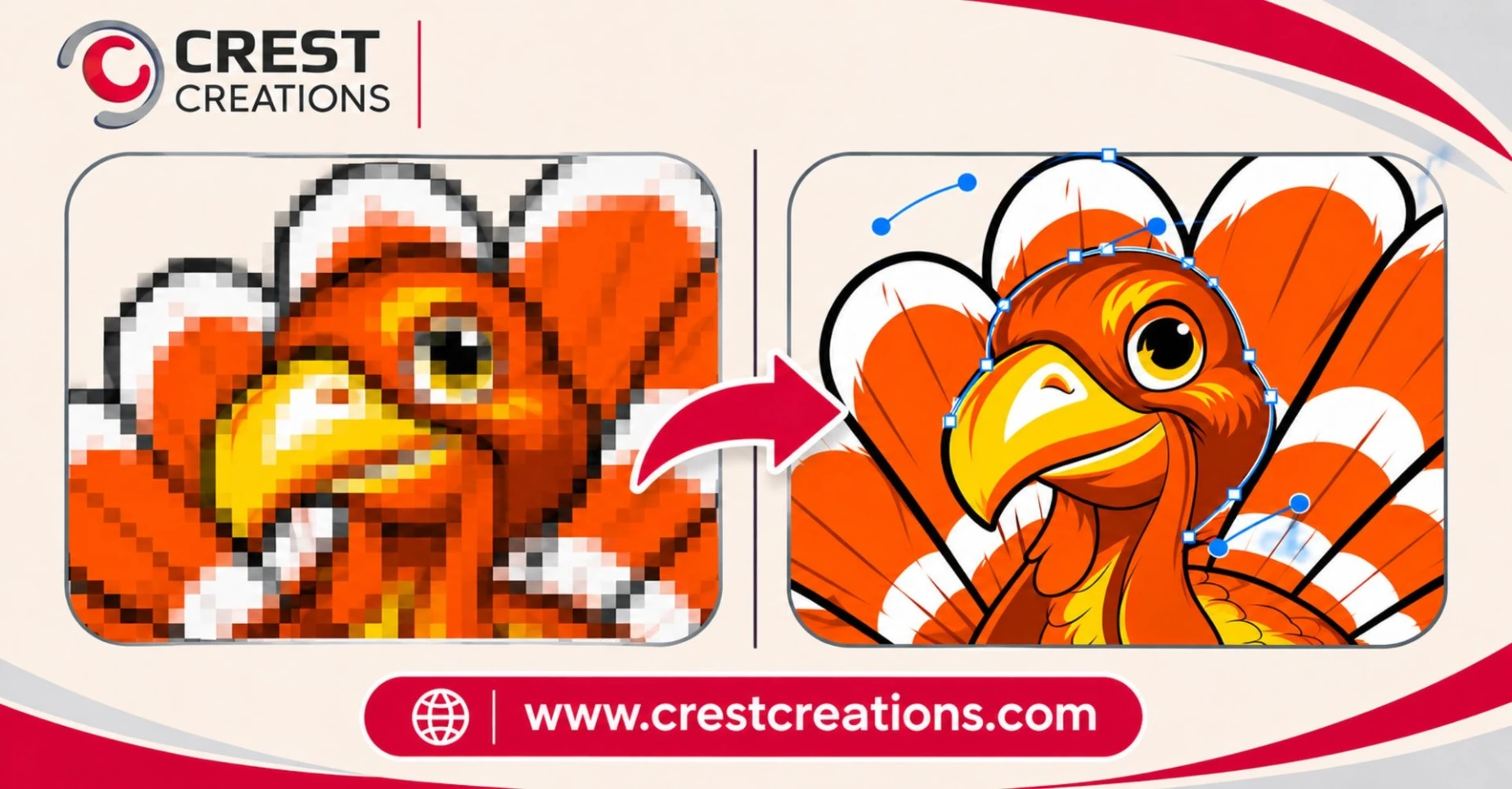
Vector Conversion rebuilds flat, pixel-based artwork as clean, scalable paths. The result is Vector Art: a file made of points, curves and fills defined by math, not by a grid of dots.
Raster vs. vector, in plain terms
- Raster files (JPG, PNG, GIF, low-res PDF) store pixels. Enlarge them and the pixels show.
- Vector files (AI, EPS, SVG, vector PDF) store shapes. Enlarge them and nothing changes.
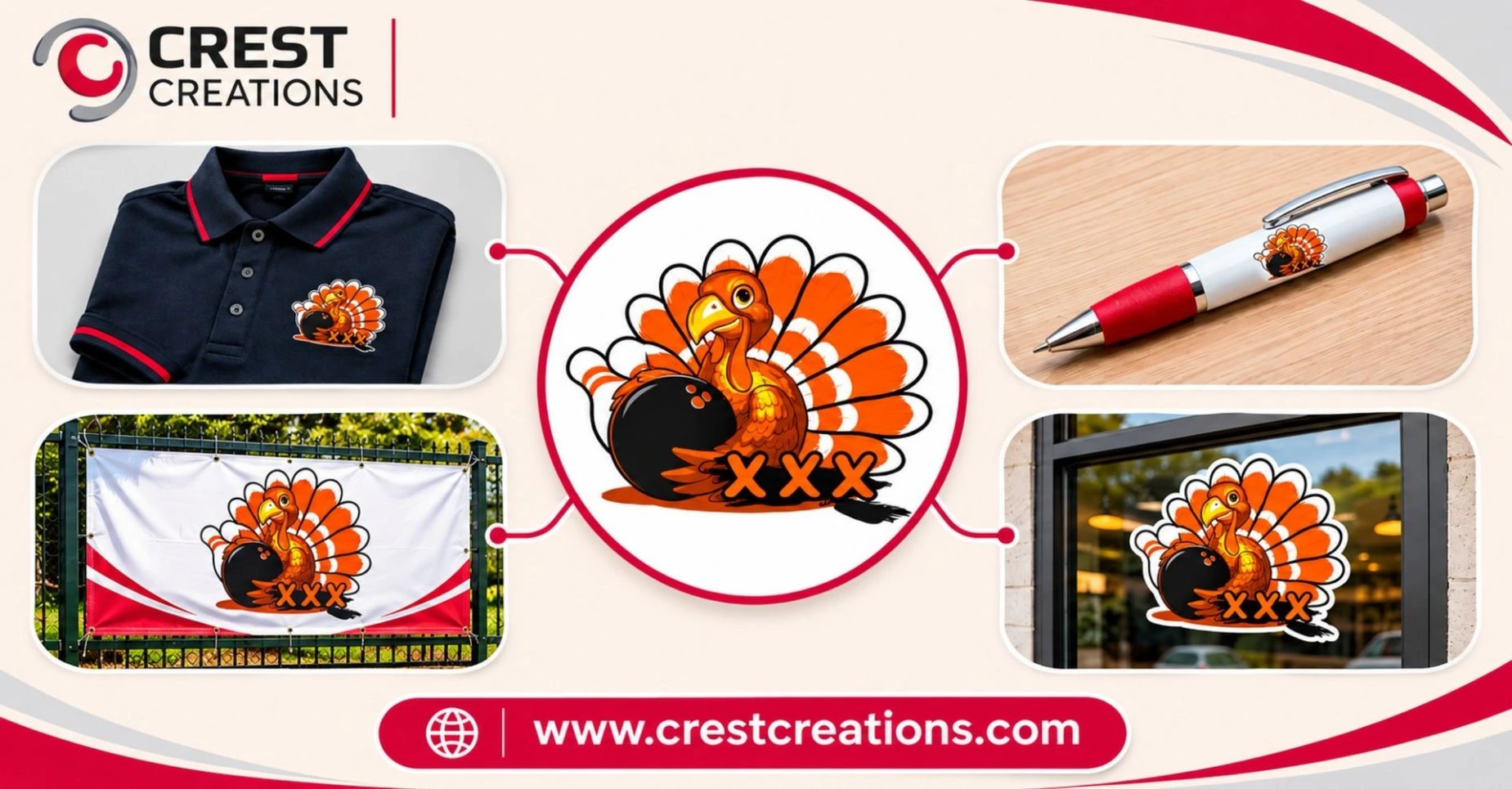
The same vector logo can sit on a pen, a polo and a 20-foot banner. One file. Zero quality loss.
Why raster art fails in production
Production equipment does not read pictures. It reads paths, colors and edges. Raster art breaks that chain in every department:
- Screen printing: blurry edges make messy color separations and soft screens.
- Embroidery: digitizers need crisp outlines to plot stitch paths and density.
- Vinyl and signs: cutters follow vector paths. Pixels give them nothing to follow.
- DTF, DTG and large format: enlarging low-res art multiplies the blur.
- Brand color matching: flat, separated colors are easy to match. Smeared, noisy color is not.
Vector Conversion removes the problem before it reaches the press, the needle or the blade.
Who Needs Vector Art Most
If you decorate, print, cut or stitch a logo, you need clean vector files. Here is how it plays out across your industry.
Promotional product distributors and suppliers
Your customers send whatever they find. Business cards, PDFs from old brochures, screenshots. You still have to quote fast and show a proof that looks right. Vector Art lets you approve artwork on day one and keep every supplier's imprint specs happy.
Print shops and screen printers
Separations start with clean shapes. Vector files give you sharp edges, exact spot colors and easy underbase control. You burn better screens and waste fewer films.
Apparel decorators and embroidery digitizers
A digitizer works from clear outlines and defined color areas. A properly converted vector gives them both. Stitch plotting gets faster. Rework drops.
Sign companies
Vinyl cutters, routers and wide-format printers all depend on vector paths. A 300-pixel logo cannot become a 12-foot storefront sign. A vector can.
What Separates Real Vector Art from Auto-Trace
Not all vectors are equal. Many shops try the one-click "image trace" button and call it done. The file opens in Illustrator, so it must be vector. Right?
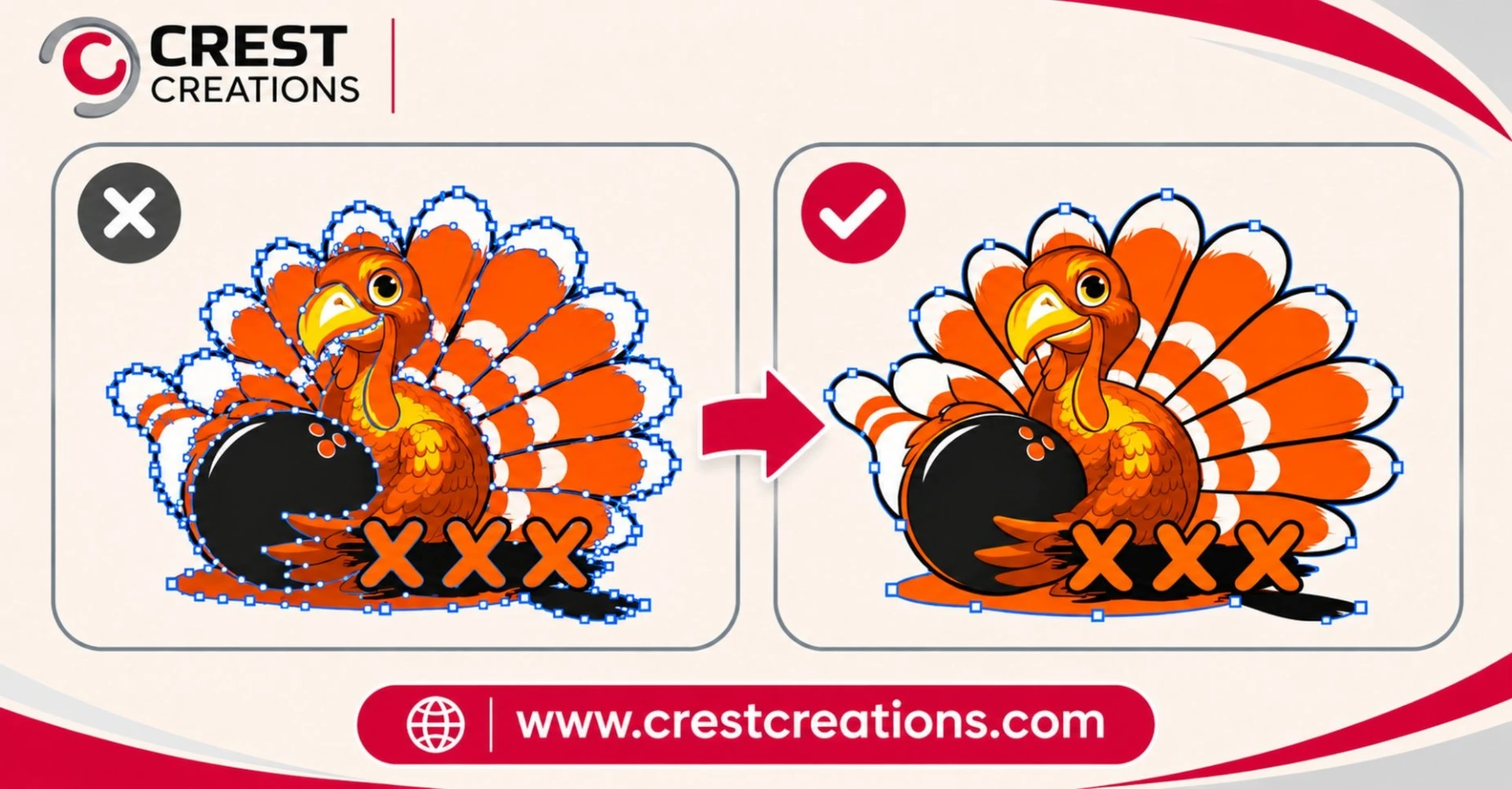
Not quite. Auto-trace follows pixels, so it copies every flaw. You get lumpy curves, hundreds of stray points, merged colors and shapes that wobble when you scale them. The file is technically vector. It is not production-ready.
The signs of production-ready Vector Art
Ask for these every time:
- Clean paths: smooth curves with as few anchor points as needed.
- Closed shapes: no gaps, overlaps or stray fragments.
- Controlled colors: a limited, named palette matched to the brand, not 40 near-identical shades.
- Real typography: text rebuilt with the correct font or converted to outlines.
- Organized layers: one layer per color or element, so your team can edit fast.
- Stress-tested scale: zoom to 400% and the edges stay sharp.
- The right formats: AI, EPS, SVG and vector PDF, ready for your workflow.
Why hand redrawing wins
A skilled artist reads the intent behind the logo. They fix the crooked circle, the clipped letter and the fuzzy corner. They rebuild the design as it should have looked. A tracing tool cannot do that. A trained designer can.
That is the real value of professional Vector Art Services: judgment, not just software.
Build It In-House or Hire a Graphic Design Agency?
Most shops start in-house. A pressman or CSR opens Illustrator between jobs and does their best. It works until volume rises.
The hidden cost of doing it yourself
- Skilled production staff lose hours to artwork instead of production.
- Rush jobs pile up at the worst possible time.
- Quality varies from one person to the next.
- Software, training and turnover add fixed costs.
- Peak season exposes every weak point.
What a Graphic Design Agency gives you
A dedicated Graphic Design Agency turns artwork into a predictable service. You send the file. You get production-ready Vector Art back. Your team stays on the floor, and your turnaround gets shorter.
The model scales with you. Ten files this week, a hundred next month: the process stays the same.
Questions to ask any provider
- Is every file redrawn by a designer, or run through auto-trace?
- Do you understand screen printing, embroidery, DTF and sign production?
- What turnaround can I expect on rush work?
- Which file formats do you deliver?
- How many revisions are included?
- Can you work under my brand and keep my customers confidential?
- Is pricing clear before work starts?
A good partner answers each one without hesitation.
Conclusion: Stop Fixing Files. Start Shipping Orders.
Bad artwork costs you time, money and customer trust. Clean Vector Art removes that risk at the start of every job.
Remember the Thursday-afternoon polo order? With a production-ready vector in hand, it moves from inbox to press in minutes. The proof is right the first time. The customer is happy. The team goes home on time.
Vector Conversion is not an extra. It is the foundation of every clean print, stitch and cut.
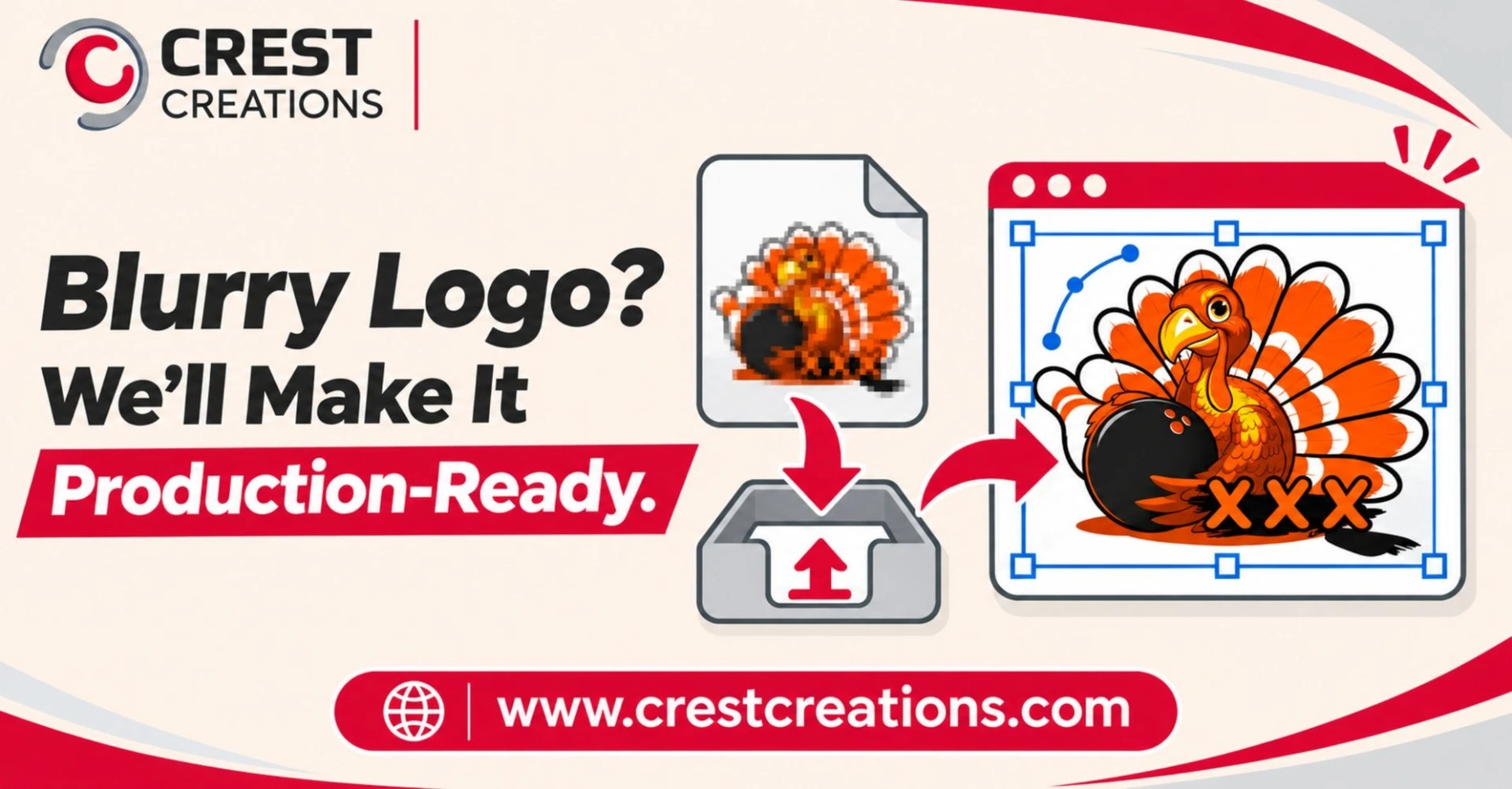
Ready to try it?
Send us your toughest logo. Upload the blurry JPG, the screenshot or the old PDF. Our designers will quote it fast and return clean, production-ready Vector Art in the formats your shop needs.
Request a quote today and see what your next order looks like without the artwork headache.